
We keep talking about aging as if it belongs to one industry.
Senior care.
Healthcare.
Housing.
Financial services.
Government benefits.
Family caregiving.
But aging does not stay neatly inside any one of those categories.
It touches all of them at once.
This is not just a senior care problem.
It is not just a healthcare problem.
It is not just a housing problem.
It is not just a financial problem.
It is a human infrastructure problem.
And economically, we are nowhere near prepared for what is coming.
The Economy Was Not Built for This
We are entering a period in which millions of older adults will need more care, more supervision, more accessible housing, more medical support, and more help with daily life.
At the same time, the people expected to provide that support are already financially strained.
Adult children are raising children of their own.
Paying mortgages.
Trying to save for retirement.
Managing debt.
Working full-time.
And increasingly, caring for aging parents.
Families are being asked to absorb costs and responsibilities that no individual household was designed to carry alone.
When a parent begins to decline, care does not arrive as one simple expense.
It arrives as a chain reaction.
Home care.
Medical equipment.
Transportation.
Medication management.
Home modifications.
Legal planning.
Lost wages.
Reduced work hours.
Assisted living.
Memory care.
Skilled nursing.
Emergency travel.
Unpaid leave.
And sometimes the loss of a career altogether.
This is not merely a family hardship.
It is an economic event.
Caregiving Is Invisible Infrastructure
Our economy relies heavily on unpaid and underpaid caregivers.
Family members coordinate appointments, manage medications, provide transportation, handle finances, monitor safety, prepare meals, and respond to emergencies.
Much of this labor is never formally counted.
It does not appear on a balance sheet.
It is rarely treated as economic production.
But without it, the entire system would collapse.
That makes caregiving infrastructure.
Just like roads allow people to get to work, caregiving allows millions of people to remain in the workforce.
Just like utilities keep homes functioning, caregivers keep households and families functioning.
Just like schools support working parents, elder care supports working adult children.
Yet we continue to treat caregiving as a private family matter rather than a critical part of the economy.
We have effectively built a system that assumes someone, usually a daughter, spouse, sibling, or adult child, will quietly step in and hold everything together.
For free.
That assumption is no longer sustainable.
The Middle Class Is the Shock Absorber
Wealthy families can often purchase support.
Low-income families may qualify for certain public programs, although navigating them can be extraordinarily difficult.
The middle class is frequently stuck in the most dangerous position.
Too many assets to qualify for meaningful assistance.
Not enough wealth to comfortably pay for years of care.
They may own a home but have limited cash flow.
They may have retirement savings but not enough to withstand long-term care costs.
They may appear financially secure on paper while living one diagnosis away from crisis.
This is the economic trap.
A family may spend decades building stability, only to watch that stability erode rapidly because one parent needs ongoing care.
The house may become the primary source of available wealth.
Retirement accounts may be drained.
Adult children may begin contributing.
Work hours may be reduced.
And decisions that affect an entire family’s financial future may be made during a medical emergency.
We call this personal responsibility.
But increasingly, it looks like systemic cost-shifting.
The burden is being pushed away from institutions and onto individual families.
And families are breaking under the weight.
Housing Has Become Part of the Care System
Housing is no longer separate from aging.
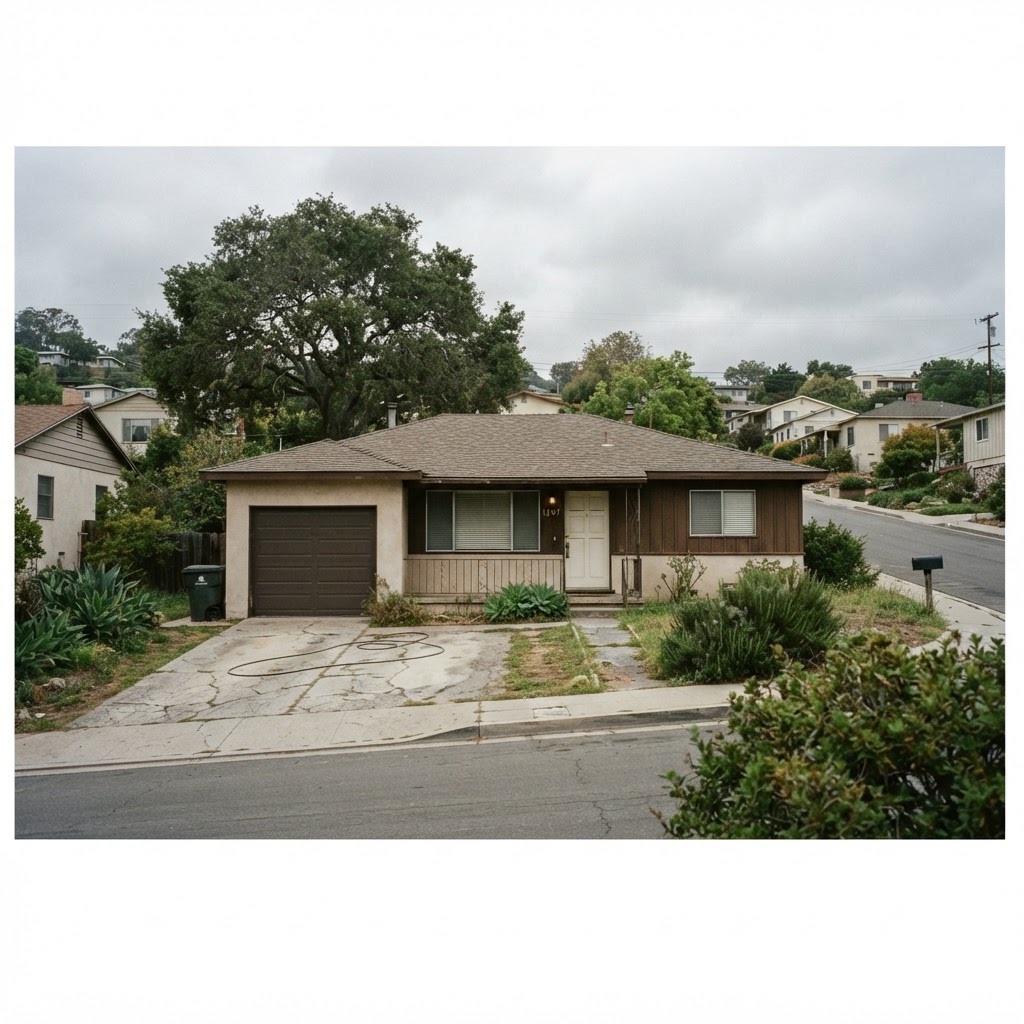
For many older adults, the home is their largest asset.
It may also be the place where they want to remain.
It may represent safety, history, identity, and family wealth.
But a house is not the same as available cash.
A person can own a valuable home and still struggle to pay for care, repairs, property taxes, insurance, transportation, or basic living expenses.
This is the reality of being house-rich and cash-poor.
When care needs rise, families are often pushed toward one question:
Do we sell the home?
But that decision is rarely just about real estate.
Selling may fund care.
It may also eliminate future housing options.
It may create tax consequences.
It may disrupt a spouse or other family member.
It may erase a source of rental income.
It may reduce or eliminate an inheritance that adult children were quietly counting on for their own financial security.
It may be the right decision.
It may also be an irreversible decision made without enough information.
That is why housing must be understood as part of our human care infrastructure.
The home is not simply an asset.
It is often the financial bridge between independence, care, family stability, and generational wealth.
Two Generations Are Depending on the Same Money
One of the most uncomfortable economic realities of aging is that two generations may be depending on the same pool of assets.
Older adults may need their savings and home equity to pay for care.
Their adult children may be hoping those assets will eventually help them buy a home, pay off debt, fund retirement, or support their own children.
Neither side is necessarily selfish.
Both generations may simply be financially vulnerable.
Parents fear running out of money.
Children fear being financially responsible for their parents.
Parents may assume their children will provide care.
Children may assume there will be an inheritance.
Then a health crisis arrives, and both assumptions collapse.
This is not only a family conflict.
It is a symptom of a broader economic problem.
Wages have not kept pace with major household costs.
Housing has become increasingly unaffordable.
Retirement security is fragile.
Care costs are rising.
Families are living longer but not necessarily healthier.
And the same home, savings, and income are now expected to support multiple generations.
The math does not work.
Employers Are Already Paying the Price
Caregiving does not remain at home.
It follows people into the workplace.
Employees take calls from doctors during meetings.
They leave work to respond to falls.
They manage care schedules between emails.
They travel unexpectedly.
They arrive exhausted.
They reduce hours.
They turn down promotions.
They leave the workforce.
Businesses may see absenteeism, distraction, burnout, turnover, and declining productivity.
But the real issue is not that caregivers are less committed employees.
The issue is that the economy has failed to build enough support around them.
We expect workers to perform as though caregiving does not exist.
We treat it as a personal interruption rather than a predictable stage of life.
That is economically shortsighted.
The future workforce will include more caregivers, not fewer.
Any serious conversation about labor, productivity, retention, or economic growth must include elder care.
Crisis Is Expensive
Our system often waits until a family reaches a breaking point.
A fall.
A hospitalization.
A wandering incident.
A caregiver collapse.
A sudden discharge.
A home that is no longer safe.
By then, options are narrower, decisions are rushed, and costs are often higher.
Lack of planning is expensive.
Lack of coordination is expensive.
Lack of trusted information is expensive.
Siloed systems are expensive.
Confusion is expensive.
Families frequently move between healthcare providers, care companies, senior living communities, financial professionals, attorneys, and real estate professionals without anyone seeing the whole picture.
Each professional may understand one piece.
Very few are responsible for helping the family understand how all the pieces affect one another.
That fragmentation creates delay, duplication, poor decisions, and unnecessary financial loss.
It also creates business opportunities for companies willing to profit from fear, confusion, and urgency.
When people cannot clearly understand their options, they become easier to sell to.
That is not infrastructure.
That is exploitation.
We Have Monetized the Crisis Without Solving It
There is no shortage of companies trying to capture the aging market.
Lead-generation platforms.
Referral businesses.
Technology companies.
Care marketplaces.
Financial products.
Housing services.
Healthcare systems.
Everyone recognizes the demographic opportunity.
But a growing market is not the same thing as a functioning system.
We can build thousands of apps and still leave families confused.
We can generate millions of leads and still fail to provide guidance.
We can create new financial products without helping people understand when they should—or should not—use them.
We can call everything innovation while the basic human experience continues to deteriorate.
The economic opportunity surrounding aging is enormous.
So is the responsibility.
If businesses profit from vulnerable families, they should also be expected to contribute to transparency, education, coordination, and better outcomes.
Aging cannot become another industry in which success is measured only by conversion rates.
What Human Infrastructure Would Actually Look Like
Human infrastructure means recognizing that care, housing, healthcare, employment, transportation, and financial stability are interconnected.
It means giving families information before they are in crisis.
It means helping people understand the true cost of staying at home, moving, hiring care, or entering senior living.
It means treating family caregivers as part of the workforce and part of the care system.
It means creating better coordination between healthcare, housing, financial, legal, and care professionals.
It means reducing the number of irreversible decisions made under pressure.
It means supporting older adults without financially destroying the next generation.
It means acknowledging that dignity and economic stability are not separate issues.
More cost clarity.
More caregiver support.
More flexible housing options.
More responsible use of home equity.
More workplace policies that reflect the reality of caregiving.
More coordination before crisis.
And far less reliance on families to magically figure everything out alone.
Aging Is an Economic Issue for Everyone
Aging is often discussed as though it concerns only older adults.
It does not.
It affects employees.
Employers.
Children.
Grandchildren.
Housing markets.
Healthcare systems.
Public budgets.
Retirement systems.
Communities.
And the transfer, or disappearance of generational wealth.
Even people who never become caregivers will be affected by the economic pressure this creates.
The future of aging will shape who can remain employed, who can afford housing, who inherits wealth, who falls into poverty, and who receives care.
It will reshape families and communities.
It will expose how much of our economy has been quietly supported by unpaid human labor.
And it will force us to decide what we actually value.
This is not merely about helping older people age well.
It is about whether the generations behind them can remain economically stable while helping them do it.
We are not facing a shortage of compassion.
We are facing a shortage of structure.
We have built systems for transactions, but not transitions.
We have built industries, but not coordination.
We have built products, but not a clear path for families.
We have treated aging as a private problem for far too long.
It is not private.
It is economic.
It is structural.
It is coming for every sector.
Aging is a human infrastructure problem.
And until we begin treating it like one, families will continue paying the price.