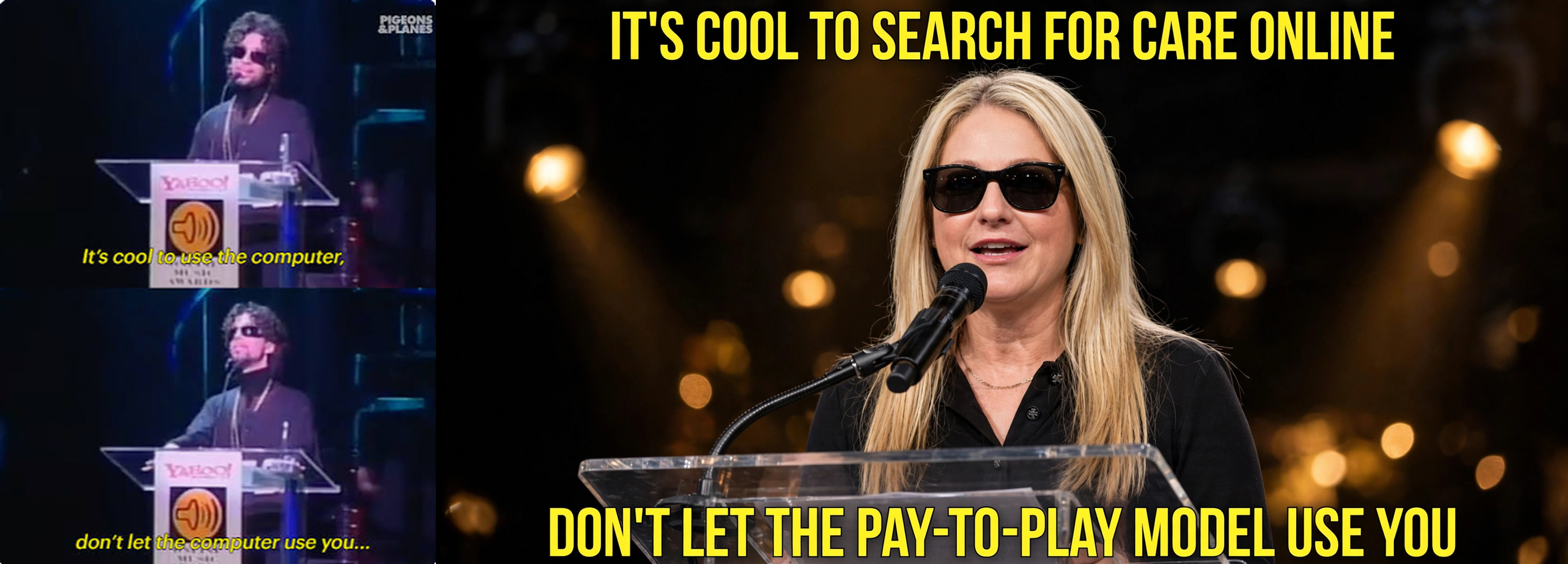

The future of senior care is not AI versus humans. It is technology helping the right humans see the whole picture.
Families are already changing the way they look for help.
Instead of opening Google and searching through pages of home care companies, assisted living communities, elder law attorneys, financial professionals and government programs, more people are simply asking AI:
"What should I do about my aging mother?"
That shift is enormous.
AI can gather information faster than any human being ever could. It can compare care options, explain terminology, organize costs, identify local resources and help a family understand questions they didn't even know they should be asking.
I believe that is going to be incredibly valuable.
But there is something AI cannot replace.
The person who listens closely enough to understand what the family is actually dealing with.
Senior care is rarely an information problem
A daughter might ask:
"How much does assisted living cost?"
That sounds like a straightforward question.
It may not be.
Maybe Mom desperately wants to stay home.
Maybe her daughter is exhausted from caregiving.
Maybe one sibling wants to sell the house and another refuses.
Maybe nobody knows how much money Mom actually has.
Maybe there's a trust.
Maybe Dad died recently.
Maybe Mom has enough equity to fund years of care, but the family doesn't understand their options.
Maybe the person asking about assisted living isn't really asking about assisted living at all.
She may actually be asking:
"How do we keep Mom safe without destroying everything our family has worked for?"
AI cannot understand that from a price search alone.
A good professional can hear the question underneath the question.
This is where senior care gets complicated
Families don't enter neat little industry categories.
They enter with problems.
A fall becomes a safety issue.
The safety issue becomes a caregiving issue.
The caregiving issue becomes a family issue.
The family issue becomes a care decision.
Then the care decision produces the cost shock.
And suddenly everyone is asking:
"How are we going to pay for this?"
Now the savings, insurance, income, house, equity and estate plan enter the conversation.
What started as a care question has become one of the largest financial decisions the family may ever make.
Yet our senior-care ecosystem is still remarkably fragmented.
Healthcare sees healthcare.
Home care sees home care.
Senior living sees senior living.
Real estate sees the house.
Finance sees the assets.
Legal sees the documents.
The family sees all of it at once.
AI could finally help us connect the dots
This is where I get excited about AI.
Not because I think technology should replace care managers, social workers, fiduciaries, attorneys, senior living professionals, financial professionals or experienced community navigators.
Quite the opposite.
AI could make those humans better informed.
It can organize fragmented information.
It can identify patterns.
It can surface resources.
It can compare costs.
It can help professionals see connections that might otherwise live in separate systems.
It can give families basic education before they ever walk into an office.
That means the valuable human conversation can start further ahead.
Instead of spending the first 30 minutes explaining terminology, we can spend it understanding the family.
But there is another future we should be paying attention to
There is a lot of money moving into aging.
And there is going to be a lot more.
An enormous aging population is colliding with rising care costs, caregiver shortages, housing wealth, private equity, healthcare consolidation, financial services and artificial intelligence.
Everyone sees the opportunity.
Technology companies want the consumer.
Healthcare companies want the consumer.
Senior living wants the consumer.
Home care wants the consumer.
Financial services want the consumer.
Real estate wants the consumer.
Referral platforms want the consumer.
And the family is standing in the middle.
That is the part we need to get right.
Because a distressed family cannot become the product.
The next battle isn't AI versus humans
It's much more important than that.
It's about who families will trust when the algorithms start recommending where Mom should live, who should care for her, what she can afford and what should happen to the family home.
Who controls the information?
Who benefits financially from the recommendation?
What information is missing?
Is the recommendation actually best for the family?
Or is it simply the most profitable path through the system?
Those questions matter.
Transparency matters.
Human judgment matters.
Local knowledge matters.
And accountability matters.
Technology should reduce confusion, not remove humanity
I don't want families navigating aging with 47 browser tabs open.
But I don't want them blindly following an algorithm either.
I want something better.
AI + trusted human guidance.
Technology that organizes the chaos.
Humans who understand the nuance.
Transparent information.
Local intelligence.
Professionals who know when a problem falls outside their expertise.
And families who understand their options before pressure forces the decision.
That is the future of senior care I want to help build.
Because ultimately, this isn't a technology problem.
It isn't even entirely a senior-care problem.
It's a human infrastructure problem.
And as billions of dollars chase the aging economy, we should remember who all of this infrastructure is supposed to serve.
The family.