
Two women with firsthand experience in senior care share a message for families: talk about the money while there is still time to make choices.
 Jessica Solomon
 Megan Silverman
There is a conversation Megan Silverman has had that she cannot forget.
As an executive director in senior living, she had to tell an 87-year-old resident that he could no longer stay because he had run out of money and his bill had gone unpaid.
She wanted to help him find somewhere else. She also knew she could not make the financial reality disappear.
Imagine having to deliver that news.
Now imagine being the person hearing it.
When Megan shared that experience with me, I understood why it still shapes her work. After more than 20 years in the senior care ecosystem, I have my own memories of families facing decisions they never expected to make.
The care is needed. The money is running low. Everyone is trying to figure out what happens next.
We have both seen the moment when a financial problem becomes a care crisis. We want families to have that conversation sooner.
Megan is bringing her senior living experience into financial services, with a particular passion for helping women feel more confident about their futures. My work through Next Best Home brings care costs, housing considerations, and trusted resources into the same conversation. Alongside mortgage professional Mark Maimon, I also help families explore financing possibilities when paying for care becomes a barrier.
Our roles are different. Our experience has brought us to a shared concern: families need help connecting the care they may need with the resources that could support it.
When we say "plan ahead," we need to explain what that actually means.
It means asking how care would be paid for if a parent needed help tomorrow. It means understanding how long current resources might last, what an existing insurance policy actually provides, and what decisions could fall to adult children.
It means asking those questions before a hospital discharge, an overdue bill, or an exhausted caregiver sets the deadline.
Megan's experience influenced her own decisions early. During our conversation, she shared that she had purchased long-term care insurance in her early 30s. Working in senior care had made the possibility of needing help feel real to her.
I recognized that feeling. My years in home care changed the way I thought about saving, too. Seeing families struggle to sustain care gave the word "future" a very specific meaning.
We are asking families to give themselves permission to look at that future now, even if the picture is incomplete.
Megan spoke about women who feel behind financially, or who never had someone help them understand where they stand. Her desire to make that conversation approachable resonated with me.
You should not have to feel financially confident before you can ask for help understanding your finances.
You can start with uncertainty. You can bring the paperwork you do have. You can say you are worried about your parents and have barely thought about your own care.
That is a starting point.
There is another reason this conversation matters: care decisions rarely stay inside one professional's office.
A move into assisted living may raise questions about a house. Paying for home care may involve income, savings, insurance, or a review of financing options. A decision that appears to solve this month's problem may affect the surviving spouse or the family's longer-term finances.
Before a family commits to selling a home or taking on debt, we want them to understand the alternatives, costs, and consequences with the appropriate professionals involved.
Sometimes a sale will be the right decision. Sometimes financing may be worth exploring. Sometimes another approach will fit better. The family deserves a careful review of its circumstances.
That requires professionals to communicate with one another.
Megan and I also connected over the kind of relationships we want to build. We value people who listen, make thoughtful introductions, and follow through because the family needs a team.
A family should be able to understand why someone is being recommended and whether a financial relationship influences that recommendation. Trust grows when those conversations are open.
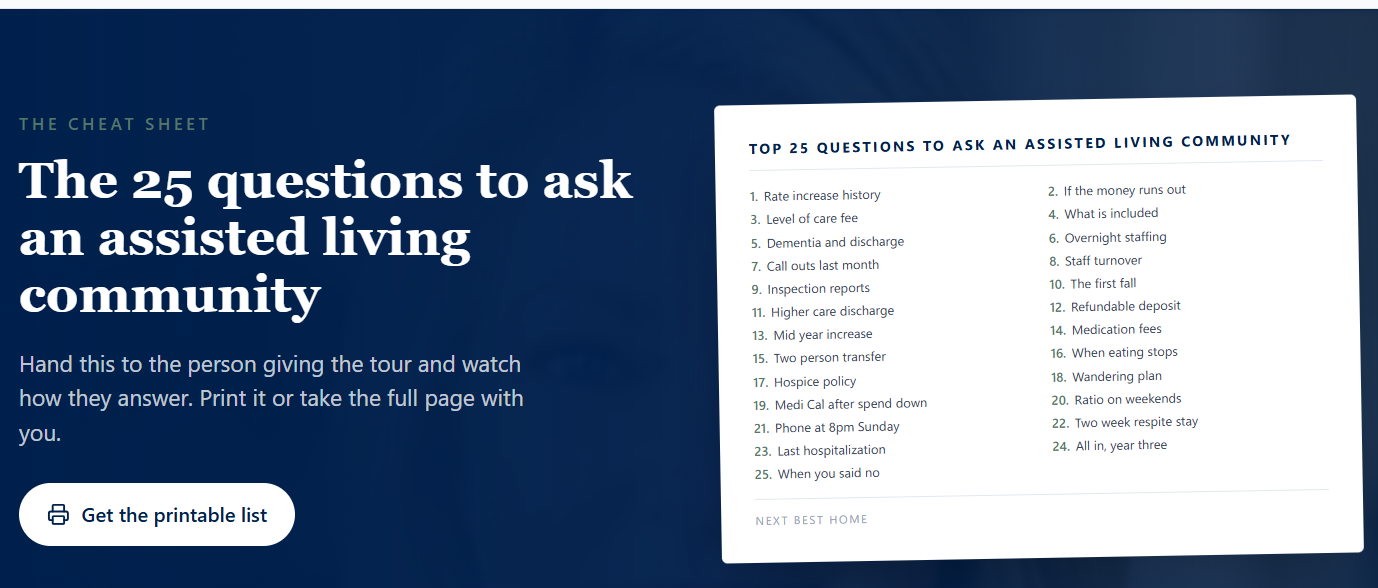
For families wondering where to begin, here are five questions worth bringing to the table:
- What would care cost in our community, and how might that change as needs increase?
- What income, savings, benefits, and insurance do we actually have available?
- If we used those resources for care, what would remain for a spouse or other household needs?
- Before we sell property or borrow money, who can help us review the financial, legal, and tax implications together?
- What happens if the current plan becomes unaffordable?
That last question belongs at the beginning.
Megan's memory of that resident is a reminder of what is at stake. These decisions affect where a person lives, who helps them, and how much disruption a family must navigate during an already difficult time.
No plan can remove every uncertainty. We can still make the costs visible, explain the choices clearly, and help families build a team before the pressure mounts.
Our message is simple: you deserve to understand how your family will pay for care while you still have time to consider your choices.
Start the conversation with your parents. Include your partner. Ask what your own future might require.
Care decisions start with financial clarity. And clarity is kindness.
Connect with us
Megan Silverman brings experience as a senior living executive director to her work in financial services and her interest in helping women build financial confidence. Connect with Megan on LinkedIn.
Jessica Solomon is the founder of Next Best Home and brings more than 20 years of experience in the senior care ecosystem, along with her work in real estate and lending. Connect with Jessica through Next Best Home.